Serviceability Requirements as per ACI 318-25 (Creep, Shrinkage & Temperature)
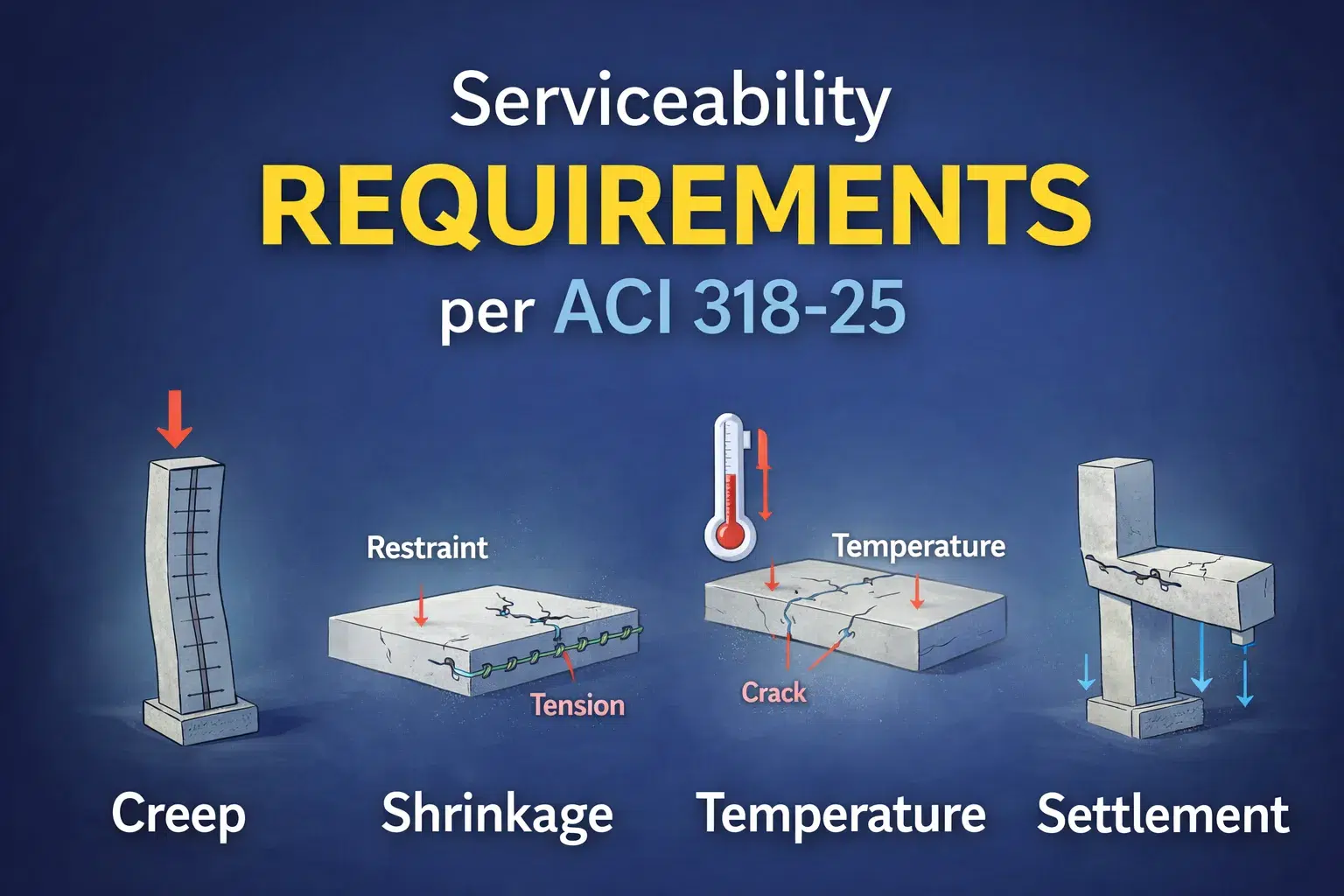
Table of Contents
Introduction
Serviceability Requirements as per ACI 318-25 (Creep, Shrinkage & Temperature) Structural design is not only about preventing collapse. A structure must also perform well during its service life. Excessive deflection, cracking, or long-term deformation can cause serious functional problems even when strength requirements are satisfied.
To control such issues, ACI 318-25 specifies serviceability requirements, focusing on effects like creep, shrinkage, temperature variation, restraint, and foundation settlement. This article explains these provisions in a clear and practical way for students and practicing engineers.
What Is Serviceability in Concrete Structures?
Serviceability refers to the ability of a structure to:
- Remain functional
- Maintain acceptable appearance
- Avoid excessive cracking or deflection
- Provide comfort and durability
ACI 318 treats serviceability as a mandatory design consideration, not an optional check.
Serviceability Requirements as per ACI 318-25
According to Chapter 4 – Structural System Requirements, the following effects must be considered:
✔ Creep
✔ Shrinkage
✔ Axial shortening
✔ Temperature changes
✔ Restraining effects
✔ Foundation settlement
Each of these effects can induce additional stresses and deformations in reinforced concrete members.
Creep in Concrete Structures
Creep is the time-dependent increase in strain under sustained load.
Key Points:
- Occurs mainly under long-term compression
- More significant in columns and prestressed members
- Reduces effective stiffness (EI)
- Increases deflections over time
Practical Impact:
- Increased column shortening
- Redistribution of internal forces
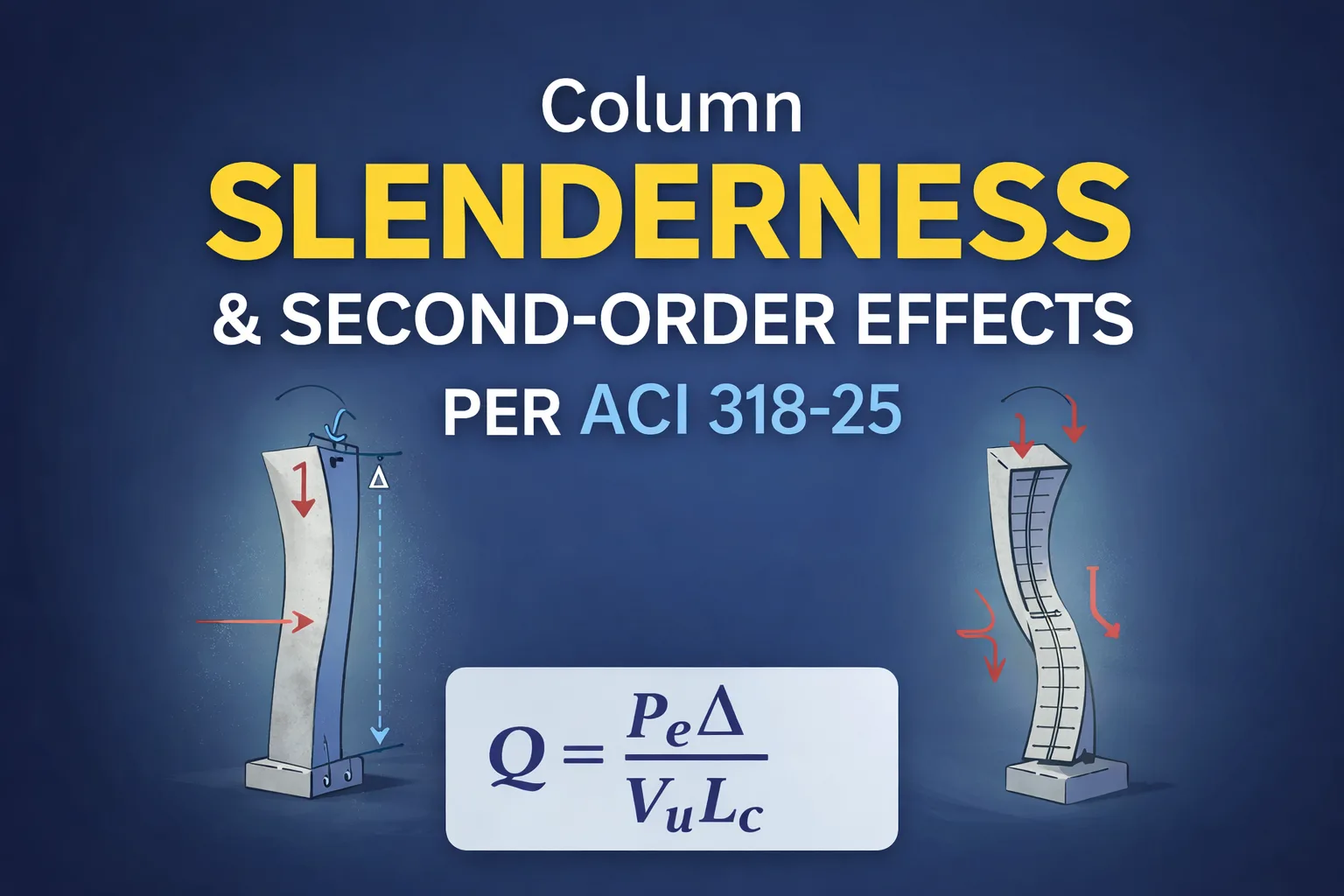
- Higher second-order effects in slender columns
Shrinkage Effects
Shrinkage is the reduction in volume of concrete due to:
- Loss of moisture
- Hydration process
Shrinkage can occur even without external loads.
Problems Caused by Shrinkage:
- Tensile stresses in restrained members
- Cracking in slabs and walls
- Additional bending moments at supports


Temperature Effects
Temperature variations cause expansion and contraction of concrete members.
When Temperature Effects Become Critical:
- Long slabs and walls
- Restrained structural systems
- Buildings with rigid connections
If movement is restrained, temperature change induces tensile stresses, especially in slabs.
ACI Requirement:
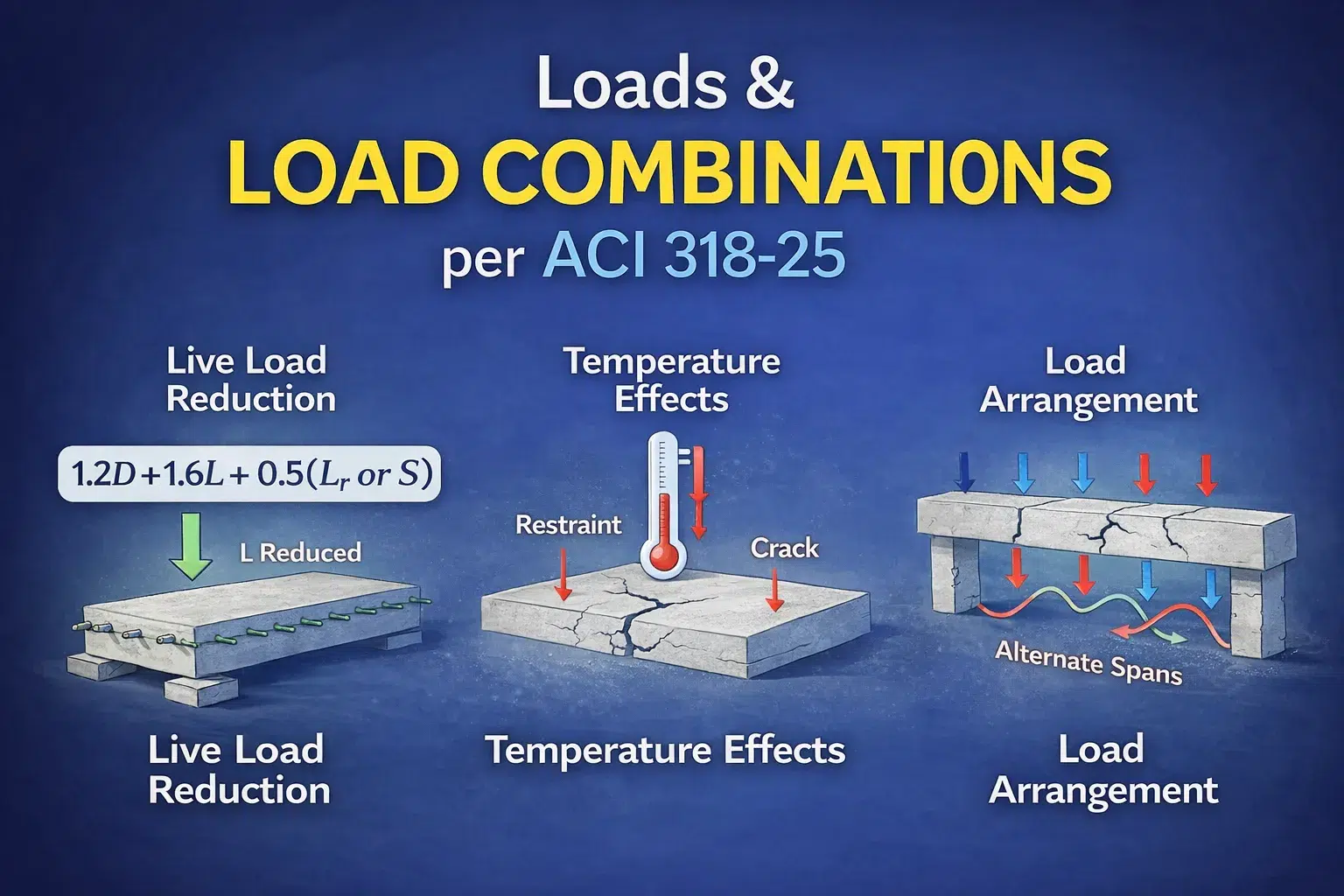
Temperature and volume change effects must be included in load combinations when significant.
Axial Shortening of Columns
Axial shortening occurs due to:
- Elastic deformation
- Creep under sustained load
Why It Matters:
- Differential shortening between columns
- Additional stresses in beams and slabs
- Cracking in partitions and finishes
This is particularly important in multi-storey buildings.
Effect of Restraining Forces
Restraint occurs when free movement of concrete is restricted by:
- Adjacent members
- Foundations
- Shear walls
- Rigid frames
Consequences:
- Tensile stresses develop
- Cracks form even without external loads
- Additional bending moments occur


Foundation Settlement
Differential settlement can cause:
- Additional bending moments
- Cracking in beams and slabs
- Serviceability failure
ACI 318 requires designers to consider realistic foundation behavior, especially for:
- Raft foundations
- Pile-supported structures
- Structures on soft soil
Serviceability in Precast and Prestressed Members
ACI 318-25 highlights that:
- Creep and shrinkage effects are higher in prestressed members
- Loss of prestress may occur due to:
- Creep
- Shrinkage
- Lack of bonded reinforcement
These effects must be included during design to avoid long-term performance issues.
Continuity and Integrity Reinforcement
Where tension occurs in the plane of slabs or walls, ACI requires:
- A load continuity path
- Adequate steel reinforcement to transfer forces
This improves:
- Structural integrity
- Crack control
- Overall service performance
Practical Design Takeaways
- Serviceability checks are as important as strength checks
- Creep and shrinkage govern long-term behavior
- Temperature and restraint effects must not be ignored
- Prestressed members need special attention
- Proper detailing improves service life
Frequently Asked Questions (FAQ)
Q1. Does ACI 318 require serviceability checks?
Yes. ACI 318-25 explicitly mandates consideration of creep, shrinkage, temperature, and settlement effects.
Q2. Why are serviceability failures dangerous?
They may not cause collapse but can lead to cracking, loss of function, and durability problems.
Q3. Are serviceability effects more severe in prestressed concrete?
Yes. Prestressed members experience higher creep and shrinkage-related losses.
Serviceability Requirements as per ACI 318-25 (Creep, Shrinkage & Temperature)
Serviceability requirements in ACI 318-25 ensure that concrete structures remain safe, durable, and functional throughout their design life. Ignoring these effects can lead to excessive cracking, deflections, and user discomfort—even when strength design is adequate.
Understanding serviceability is essential for real-world structural engineering practice.
Column Slenderness and Second-Order Effects as per ACI 318-25:- https://engineerlatest.com/column-slenderness-and-second-order-effects-as-per-aci-318-25/


Post Comment